Say a buyer closes on a house in Palos Verdes Estates and wants to repaint the exterior the same warm white the neighbor used two doors down. Exterior paint is among the changes reviewed by the Palos Verdes Homes Association Art Jury, a private body that has reviewed exterior changes in this community since before the city incorporated.
Its review process is a distinction buyers should understand when comparing homes in Palos Verdes Estates with homes in Rancho Palos Verdes or Rolling Hills Estates. The market figures below show recent price differences, while the sections that follow explain the review process and timelines buyers may want to consider when planning exterior changes.
The Number Everyone Attributes to the View
As of a July 2026 market report, homes in Palos Verdes Estates were selling for roughly $1,040 per square foot, up 9.3% year over year. A few miles south in Rancho Palos Verdes, the equivalent July 2026 figure was about $714 per square foot, down 11.5% over the same period. In Rolling Hills Estates, a March 2026 sale-price reading showed $813 per square foot, up 6.4% year over year, while a separate mid-2026 list-price tracker for the same city showed a lower figure near $670. Different months, different metrics, and a meaningfully different number, which says as much about how thinly these markets trade as it does about the homes themselves.
The easy explanation for Palos Verdes Estates' premium is the coastline. It's real, but it's incomplete. Even within Palos Verdes Estates, price behaves unevenly by pocket. A South Bay market report covering the first half of 2026 noted that homes in Lunada Bay, Malaga Cove, Monte Malaga and Valmonte can post very different results even at similar square footage, which means the ocean-view story only explains part of the spread. For buyers planning exterior changes, the rules behind those decisions matter too.
Understanding the Art Jury Review Process
The Palos Verdes Homes Association was established in 1923, sixteen years before Palos Verdes Estates incorporated as a city in 1939. It was founded alongside the master plan for the community, and its original Art Jury reviewed the same kinds of decisions it reviews today: what gets built, what color it's painted, and whether a fence or hedge fits the character of the block. The Malaga Cove Library and Plaza, designed by architect Myron Hunt and later placed on the National Register of Historic Places, are among the buildings that came out of that same founding vision.
What makes this different from a typical HOA is that the obligation is written into the deed, not into bylaws a homeowner vote can loosen. According to the Homes Association's own FAQ, owners of record within Palos Verdes Estates and the Miraleste neighborhood of Rancho Palos Verdes are automatically members, with each property carrying one vote. The review requirement transfers with the title. A buyer doesn't opt into it at closing. They inherit it.
That's a different proposition than most luxury buyers are used to evaluating.
What Actually Gets Reviewed
The Art Jury's authority covers the exterior appearance of a property, not the interior. Its own guidance describes review over additions, windows and doors, fences and walls, and exterior paint color. Interior-only renovations generally fall outside its scope, which is worth knowing before you assume a kitchen remodel triggers the same process as a new roofline.
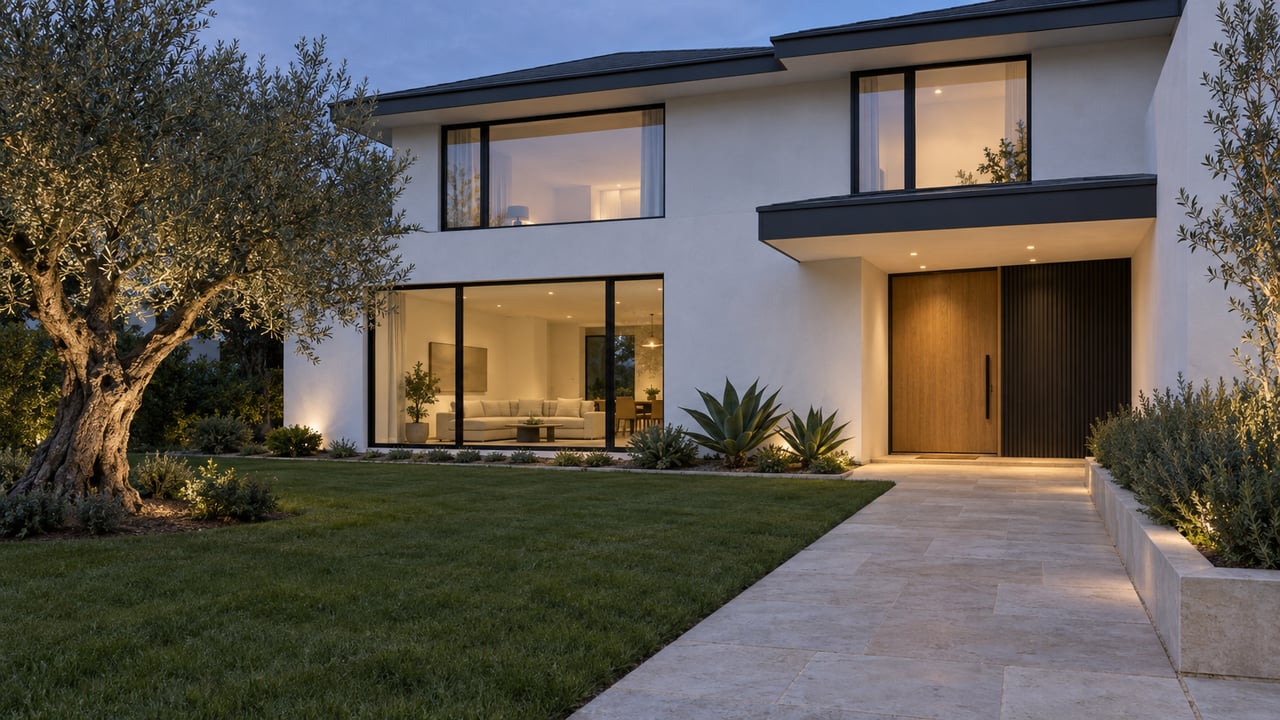
The range of what's been approved over the decades is wide. Architectural styles cleared by the Art Jury include Spanish Colonial, Tuscan, French, Craftsman, Ranch, and Post and Beam Modern, so the goal has never been to freeze the city in one look.
Art Jury Review Timelines
The review timeline depends on the scope of the work. Simple exterior changes can clear Art Jury review in a matter of weeks once a complete application is submitted. A full remodel, a second story, a new build, or grading work is a different calculus. Larger projects routinely require multiple review cycles and can take three to nine months or longer, running in parallel with, not instead of, standard city permitting.
The Art Jury process has also received local news coverage. In March 2026, ABC7 Los Angeles reported on homeowners in Palos Verdes Estates who described frustration with the process.
For a seller, unresolved Art Jury or permit history can also complicate a sale. Lenders and insurers sometimes ask about unpermitted exterior work, and buyers frequently request proof of approvals during due diligence. Anyone planning to list a home that's had exterior changes made without full sign-off should expect that history to surface before it closes.
Four Cities, Different Market Figures
The Palos Verdes Peninsula is often talked about as one market, and the differences matter more than the shared zip codes suggest.
| City | Who reviews exterior changes | Price per square foot | Recent pace |
|---|---|---|---|
| Palos Verdes Estates | Palos Verdes Homes Association Art Jury, a private body | About $1,040 per square foot, up 9.3% year over year as of July 2026 | About 43 days on market over the three months ending May 2026, up from 32 days a year earlier |
| Rancho Palos Verdes | About $714 per square foot, down 11.5% year over year as of July 2026 | About 40 days on market over the three months ending May 2026 | |
| Rolling Hills Estates | About $813 per square foot in March 2026 sale prices; a mid-2026 list-price tracker shows a lower figure near $670 | 126 days on market in March 2026, up sharply from 39 days a year earlier | |
| Rolling Hills | Too few sales to produce a reliable figure | Just 7 recorded sales in the first half of 2026 |
The Rolling Hills Mirage
Rolling Hills deserves its own caution. A single-month tracker for December 2025 put the median sale price there at $618,000, a number that would suggest the most exclusive gated enclave on the Peninsula had gotten shockingly affordable. It hadn't. A separate South Bay market report covering the full first half of 2026 recorded only 7 total sales in Rolling Hills, at an average price of $4,984,300, with 18 properties listed at an average asking price of $7,100,300.
Both figures are technically accurate. Neither is useful on its own. When a market produces single-digit sales in six months, one modest transaction or one estate sale can swing the median by millions in either direction. It's a pattern worth remembering anywhere on the Peninsula where headline numbers move by double digits month to month. The number is real. The story it implies often isn't.
What This Means Depending on Why You're Buying
If the plan is to buy a finished home in Palos Verdes Estates and live in it largely as it stands, the Art Jury is mostly background noise. Its work is already reflected in the architectural consistency you're paying for, and you may never file an application.
If the plan involves a renovation, a second story, an ADU for extended family, or a full teardown and rebuild, the calculus changes. Budget the review timeline the same way you'd budget financing or inspection contingencies, because an approval timeline of three to nine months or longer can be the difference between a project that closes on schedule and one that stalls a listing or a move-in date. For developers and value-add buyers weighing Palos Verdes Estates against Rancho Palos Verdes or Rolling Hills Estates, that timeline difference is often the more decisive number, even when it never appears next to the price per square foot.
Questions Worth Asking Before You Write an Offer
Does the Art Jury review interior work? No. Its authority covers exterior appearance, from rooflines to paint color to landscaping visible from the street. Interior renovations generally don't require its sign-off.
Can a new owner opt out of Art Jury jurisdiction? No. The requirement comes from deed restrictions recorded against the land, not a contract you sign at closing, and it transfers automatically with ownership.
How much time should a renovation budget include for approval? Minor exterior changes can move through in a matter of weeks. Larger projects, including second stories, new construction, or grading work, often need three to nine months or longer across multiple review cycles, in addition to standard city permitting.
Understanding which of the Peninsula's four rulebooks applies to a specific address, and what that means for timeline and resale, is the kind of detail that belongs in the conversation before an offer, not after. Ruth Elia works this market from Beverly Hills across the Westside and coastal Southern California, with the local grounding to walk buyers and sellers through exactly what a Palos Verdes Estates address does and doesn't allow. Schedule a private consultation to talk through what a specific property or project would actually require.
This article is general information, not legal, tax or financial advice. Consult a qualified professional about your situation.